Friday, March 25, 2022

Fish Ice Cream


Would you try it?  It looks good. 


It is currently being sold at the Sakura Fes Nihonbashi 2022 event in Tokyo's Nihonbashi neighborhood until April 10th. The Odashi no Omekashi comes in three different flavors, each one featuring dashi and the primary ingredient Katsuobushi, which is simmered, smoked and fermented skipjack tuna, also known as bonito. Bonito shavings are used to make dashi, a soup stock used in many Japanese dishes. 


The three flavors available are: 


Tsuyu no Moto caramel and dashigara cookies

This is a richly flavored marbled ice cream combining caramel made from Ninben's つゆの素 特撰 Tsuyu no Moto Tokusen premium triple concentrated soup base and coarse sugar from Kikaijima Island in the Amami archipelago, prized for its salty-sweet brown sugar-like flavor, and cookies made from rice flour and katsuobushi grounds leftover from brewing dashi.

Dashi, sudachi and bonito ginger

A squeeze of sudachi citrus goes wonderfully on bonito sashimi, just as freshly grated ginger is perfect on bonito tataki (seared bonito). This ice cream pays homage to these favorite flavor combinations, blending dashi, sudachi, and ginger to create a rich umami profile and extending the flavor of golden dashi made with Ninben's katsuobushi.

Dashimaki Tamago

One way of appreciating dashi is combining it with eggs to make an omelet called だし巻き卵 dashimaki tamago. This ice cream reproduces the gentle and satisfying taste of this dish, blending eggs from free-range chickens fed on homemade fermented feed, then steamed to perfection and flavored with Ninben's 白だし特撰 Premium Shirodashi, a light-colored concentrated soup stock.


Price for the set of three is 1,950 yen including tax.  It looks good, but seems a little pricey for me.  What do you think - Would you try it?

Thursday, March 24, 2022

Yugeta Mariko - First Woman Over 60 to Run Sub-Three Hour Marathon


Yugeta Mariko currently holds the women's marathon record for 60 - 64 year olds, finishing the 2021 Osaka International Women's Marathon in a time of 2:52:13. She ran her first marathon at age 24, finishing in 3:09:21, and hoped to run a sub-3 hour marathon some day. 


After that, she married and had four children, so running took a back seat to her family.  Shortly before her 40th birthday, she returned to running. At age 51, she came close to her goal of under 3 hours, finishing the Nagoya Women's Marathon in just under 3 hours 6 minutes. She succeeded in breaking the three hours barrier at age 58. 


When she discovered that no woman over the age of 60 had completed a marathon in under three hours, that became her next goal. She is now the only woman to have met that goal, not once but multiple times. She runs 600 to 800 kilometers a month, making sure to eat well and sleep enough, and avoids alcohol. Her new goal is to finish in under 2 hours, 50 minutes.  


She is so amazing! Never give up on your dreams or think you are too old to do something.

Tuesday, March 22, 2022

Quiet Please


I really like these polite reminders about how to behave on the trains in Japan.

Monday, March 21, 2022

Monday Morning Star Count - Week 45

Year five of the temperature quilt 

Week 45 

March 6 - 12 

52, 55, 45, 54, 55, 64, 70


I am reporting the high temperature each day.  My Year Five temperature/color scheme remains the same as previous years: 

100+ Brown 

90-99 Red 

80-89 Orange 

70-79 Yellow 

60-69 Green 

50-59 Blue 

40-49 Purple 

30-39 Pink 

20-29 White 


You can see my finished Year One Quilt here.

Sunday, March 20, 2022

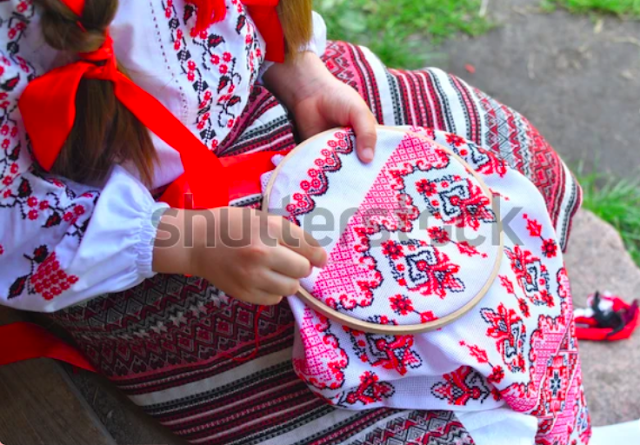
Ukrainian Embroidery


We are all hearing and thinking about Ukraine these days. 


I had heard of Ukrainian embroidery before, but other than seeing colorful embroidered clothing, didn't really know what it was and had never tried it.  Looking on the internet, I came across a free simple Ukrainian pattern for a bookmark on the EGA website. This little pattern was perfect and I started working on it yesterday afternoon, using the called for colors. 


I wondered about the colors used and found this explanation on the 2kolyori website.


White – Everyone knows that this color implies innocence, virginity, purity. Our ancestors considered that embroidery with decorative white color could be worn only by young unmarried girls. It was because white embroidery was regarded as the symbol of virginity and protected girls from misfortunes and the evil eye. 


Red - is the most popular color of embroidery, our ancestors said "this paint fills up positive live energy". Red symbolizes love to humans, life, the sun energy, joy. That's why children's and women's embroidery items are most frequently adorned with red threads on white or red fabrics.


Black – as the earth is the main source of food of our predecessors, they related the color black to the earth and its fertility. But it is not unanimous in different regions of the country. For example, it is considered to be the symbol of mourning and death in the Polissya area, and just on the contrary in Podil and  on Borshivska embroidery. Black embroidery on the clothes promises welfare and wellbeing to its recipient.


Dark blue – is a frequent color on Ukrainian embroidered clothing as our ancestors referred to it as a powerful talisman. The symbol of the sky and water (healing from illnesses and spiritual calmness). Embroidery with dark blue threads is most often seen on men’s embroidery and on children’s one as well, as our predecessors tried to protect children and men who were often in danger from illnesses and threats.


Green – is a female color on the Ukrainian embroidered shirts, it is associated with youth, beauty, carelessness and spring. It was believed that the green colour on embroidery saves in nature calamities.


Golden or yellow – this color is the symbol of honey and wheat, welfare, wellbeing, richness and joy. Embroidered clothes with golden or yellow ornaments will help to bring material well being into your life.


Multicolored ornaments – All colors mentioned above are considered to be traditional both for Ukrainian embroidery and accessories. Natural dyers today make it possible to create threads of versatile colors: grey-blue, light and dark-brown, from light blue to deep dark-blue, a rich palette of green and red tones. Multicolored ornaments in the embroidered towels and clothing are met all over Ukraine. Ukrainian artisans accomplish wonderful bright and unique patterns with the help of multicolored threads.

Saturday, March 19, 2022

Smithsonian's National Zoo Pandaversary


Former First Lady Patricia Nixon was instrumental in bringing giant pandas to the Smithsonian's National Zoo. In February 1972, at a dinner in Beijing then First Lady Patricia Nixon told Chinese Premier Zhou Enlai of her fondness for giant pandas.  As a gesture of goodwill, Premier Zhou gave two giant pandas to the American people. President and Mrs. Nixon chose the Smithsonian's National Zoo in Washington DC as home for the pair, Ling-Ling and Hsing-Hsing. The then Zoo director Theodore Reed escorted the pandas from China and they arrived in Washington DC on April 16, 1972.  Mrs. Nixon welcomed the pair in an official ceremony on April 20,1972, declaring "pandamonium was going to break out here at the Zoo." 


On April 16, 2022, the Smithsonian's National Zoo will celebrate 50 years. Check out this Washington Post article to find out more about the beginnings of giant pandas coming to the Smithsonian's National Zoo.


Friday, March 18, 2022

Night Time Quake


You never know when the next earthquake will happen. It is just over eleven years from the big earthquake and tsunami on March 11, 2011. 


This screen shot is of the one that occurred close to midnight Wednesday night.  The shaking woke me up but there was no damage where I am. I live in the dark blue (3) area. I read that at least four people died and many more were injured. A bullet train with about 100 passengers derailed and there were no injuries. Japan Today reported 2.2 million households had power knocked out. 


I think this earthquake is a reminder to do the things you want to do while you still can. The next one could be worse.

Thursday, March 17, 2022

Nishiyama Onsen Keiunkan


I'm always thinking of travel and researching places I might go.  I was looking at Yamanashi Prefecture, which is a neighbor of the prefecture I live in and came across information about Nishiyame Onsen Keiunkan, a hotspring hotel in Hayakawa, Yamanashi. 


In 2011, Guiness recognized this place as the world's oldest hotel.  It has been run by the same family and welcomed ancient samurai to modern tourists for over 1,300 years. Fifty-two generations of decendants have operated the hotel and onsen, adding on to the space and modernizing it as time went on.  


There are 37 guest rooms, a restaurant, and a moon-viewing platform. The hot bath machinering brings in 1,000 liters of naturally heated water per minute. 


I checked Booking.com for one night for one person and the cost is 66,000 yen, including dinner and breakfast.  That is more than I pay for a month's rent so I don't think I will be staying there any time soon, but I will keep it in mind just in case I ever come into some money.


Wednesday, March 16, 2022

Work In Progress Wednesday

This week I have been working on the hand quilting of year two of the temperature quilt and Puppy Love.  I am close to finishing the cross stitch, then will do the backstitching/outlining.  


As I have written about before, the legs are quite confusing. There appear to be be two legs, plus a shadow of another leg. Is there supposed to be a leg hiding behind the puppy?  The placement of the legs present do not seem to be able to hold up the girls, even if there were four legs.  Here is the photo from the kit.


It is a strange mystery. I'm not planning to change or "fix" anything and will continue with it as charted, but it is strange.

Tuesday, March 15, 2022

Unlicensed Crossbows Illegal as of Today in Japan


In June of last year, the Japanese government announced a revision to Japan's Firearm and Sword Control Law, to become effective March 15, 2022. Owners will have to turn in their crossbows unless they apply for and are granted a license to continuing owning one. License applicants have to be at least 18 years old, not have served jail time in the last five years, and undergo a background check. Licenses will only be granted for target/sport shooting or commercial/industrial use such at licensed animal control. Licenses will not be granted for display or collection purposes. Owners not applying for licenses must turn in their crossbows to their local police stations. (I wonder what the police will do with them.) 


Authorities say this law was enacted because of an increase in crossbow related violence. (I always read the crime news and I don't think I've read anything about this type of violence.) Unauthorized possession of a crossbow will result in penalties of up to 500,000 yen (about US$4,350) in fines and up to three years in prison. A six month grace period is allowed while waiting for the license application to be processed but firing the weapon without a permit during this time is prohibited.  Loading the crossbow duing the waiting period is also prohibited and can incur a fine of up to 200,000 yen.  


Japan means business when it comes to weapons. I'm happy with living in a country without gun or crossbow violence.  Are crossbows common and/or legal where you live?

Monday, March 14, 2022

Monday Morning Star Count - Week 44

I'm still working on year two hand quilting but no new photo.

Year five of the temperature quilt 

Week 44

February  27 - March 5

61, 59, 63, 59, 57, 54, 64


I am reporting the high temperature each day.  My Year Five temperature/color scheme remains the same as previous years: 

100+ Brown 

90-99 Red 

80-89 Orange 

70-79 Yellow 

60-69 Green 

50-59 Blue 

40-49 Purple 

30-39 Pink 

20-29 White 


You can see my finished Year One Quilt here.

Sunday, March 13, 2022

Hello Kitty Haruka

This cute train travels between Kansai Airport and Kyoto.


This is what the Japan Railways website says about the design:


Wouldn't you like to ride this train?

Saturday, March 12, 2022

From Chopsticks to Furniture

I read an interesting article on Atlas Obscura about a startup company called ChopValue in Vancouver Canada that is changing disposable chopsticks into furniture.  What a great idea!  


Chopsticks have been used for more than 5,000 years and currently about a third of the world population use them daily. Each year about 80 Billion pairs go to landfills.  What a waste! 


Felix Böck, founder of the Vancouver-base start up ChopValue says that in Vancouver alone, 100,000 chopsticks a day are being thrown away. Since 2016, Böck has been on a mission to do something about the disposable chopstick problem.  Instead of trying to eliminate tham, he is trying to give them new life. ChopValue staff pick up about 350,000 used chopsticks from over 300 restaurants in Vancouver a week, and they become book shelves, cutting boards, coasters, desks, and custom decorations.


First the used chopsticks are coated in water based resin, then sterilized at 200 degrees F for five hours.  Then a hudraulic machine breaks the wood down into composit board, which is sanded, polished, and lacquered as necessary. This is the core piece for everything from desks to table tops.


If you would like more information about this company, check our the website.


I can't help wondering how many chopsticks are thrown away every day in Japan.  Wouldn't it be great if they could be recycled into something useful? 

Friday, March 11, 2022

Friday Finish - Mill Hill Santa's Treats


I like these Mill Hill kits.  The combination of cross stitch and beads make them fun.  I've done a few others in the past.  


Have you done any of these kits?  What did you think?

Thursday, March 10, 2022

Deleting Your "Digital Estate" After Death

I really like reading about the surveys taken in Japan. Market research company Rakuten Insight conducted a survey of of Japanese aduts aged 20 to 60 about their end of life planning.


About 70% said they intend to make end of life preparations at some point, with the most common examples being "managing household goods" at almost 61%, and "managing PC or smartphone data" at just under 40%. It is surprising to me that these two were so much higher than preparing a will or funeral and grave arrangements.  


I suppose no one really wants to think about their own death and that is the reason many people don't make any plans. The problem with that is, if you don't make plans, someone else who knows less about your stuff, has to handle it after you are gone.


Another question on the survey was whether they wanted to keep or delete items that are part of their "digital estate" after death.  About 70% of those surveyed wanted to delete everything.


I don't have any social media accounts, like Twitter, Instagram, Facebook, or TikTok, so I never gave any thought to this.  I would like my blog to stay. What do you think? Do you want your digital estate deleted after you die? Who will take care doing that?

Tuesday, March 8, 2022

Cherry Blossom Forecast 2022

Springtime in Japan means Sakura. Everyone in Japan looks forward to the beautiful cherry blossom season.  Weathernews says it will be an early sakura season again this year, predicting 5 - 10 days earlier than in 1991-2020.


Here are the predicted dates for the areas of Japan:

  • Kagoshima: 23 March
  • Fukuoka: 16 March
  • Kochi: 21 March
  • Hiroshima: 15 March
  • Osaka: 22 March
  • Nagoya: 18 March
  • Kanazawa: 25 March
  • Tokyo: 18 March
  • Nagano: 1 April
  • Niigata: 1 April
  • Sendai: 31 March
  • Akita: 8 April
  • Aomori: 15 April
  • Sapporo: 23 April
  • Kushiro: 8 May


And here are the dates for favorite Hanami sites:


  • Kumamoto Castle (Kumamoto Prefecture): 20 March
  • Maizaru Park (Fukuoka Prefecture): 16 March
  • Peace Memorial Park (Hiroshima Prefecture): 21 March
  • Kochi Park (Kochi Prefecture): 21 March
  • Arashiyama (Kyoto Prefecture): 29 March
  • Tsuruma Park (Aichi Prefecture): 18 March
  • Sunpu Castle Park (Shizuoka Prefecture): 21 March
  • Takato Joshi Park (Nagano Prefecture): 29 March
  • Ueno Onshi Park (Tokyo Prefecture): 16 March
  • Shiraishi Riverbank Thousand Trees at a Glance (Miyagi Prefecture): 1 April
  • Hirosaki Park (Aomori Prefecture): 17 April
  • Goryokaku Park (Hokkaido Prefecture): 21 April


In my area, it looks like March 21st will be the forecasted date.  When will spring (or autumn) start where you live?

Monday, March 7, 2022

Monday Morning Star Count - Quilting Year Two and Week 43

I'm continuing to hand quilt year two.


Year five of the temperature quilt 

Week 43 

February  20 - 26 

46, 46, 46, 48, 48, 54, 57


I am reporting the high temperature each day.  My Year Five temperature/color scheme remains the same as previous years: 

100+ Brown 

90-99 Red 

80-89 Orange 

70-79 Yellow 

60-69 Green 

50-59 Blue 

40-49 Purple 

30-39 Pink 

20-29 White 


You can see my finished Year One Quilt here.

Sunday, March 6, 2022

Kokeshi Dolls - Traditional Crafts and Works of Art

After reading a post about Jeanie's trip to Japan and thinking about dolls because Hina Matsuri was celebrated just the other day, I thought it would be a good time to write about Kokeshi dolls.  I've often seen these traditional dolls, but I need to learn about them.


Kokeshi dolls are simple wooden toys without arms or legs that have been crafted by traditional craftsman in the northeastern section of Japan, known as Tohoku. This area is comprised of six prefectures - Aomori, Akita, Iwate, Yamagata, Miyagi, and Fukushima, with Miyagi being thought to be the actual origin of the dolls in the 1800's.


According to Wikipedia, there are 11 types of these dolls, based on location.


Nippon.com lists these 12 types:

1. Tsugaru Style (Aomori)

Tsugaru-style kokeshi are made mainly in Nuruyu Onsen and Ōwani Onsen, in the Tsugaru district of Aomori Prefecture. The head and trunk are carved from a single piece of wood. Many of these kokeshifeature bobbed hair, a cinched waist, and a flared foot similar to a skirt. Painted designs are often daruma, a representation of Bodhidharma, or peonies, the flower on the family crest of the Tsugaru clan.

2. Nanbu Style (Iwate)

This style of kokeshi has a loosely attached head that makes a knocking sound when the doll is moved. The wood on these kokeshi was originally left plain to heighten appreciation of the grain, but painted designs were adopted later, influenced by the Naruko and Tōgatta styles. Produced mainly in the cities of Hanamaki and Morioka in Iwate Prefecture.

3. Kijiyama Style (Akita)

Made from a single piece of wood, this kokeshi has a small, somewhat elongated head with a bobbed hairstyle often topped by a red, ribbonlike decoration. The Kijiyama-style kawatsura variety’s distinctive feature is the striped kimono design on the trunk, although some carry a chrysanthemum or plum blossom design.

4. Naruko Style (Miyagi)

In this style of kokeshi, the head is attached by a peg fitted into the body and makes a squeaking sound when turned. The slightly cinched trunk is decorated with colorful chrysanthemum or momijimaple designs that enhance the doll’s endearing facial expression.

5. Sakunami Style (Miyagi)

This slim variety echoes the item’s original function as an easy-to-grasp children’s toy. The shoulders and foot are turned on a potter’s wheel and the center of the trunk is often decorated with a motif of chrysanthemum with long, thin petals. The only remaining producer of this style in modern-day Sakunami is the Hiraga Kokeshi Shop.

6. Tōgatta Style (Miyagi)

In this style of kokeshi, the head is proportionally larger than the body, and the top of the head is crowned with a red radiating pattern. This showy variety is gaily decorated with either chrysanthemum, plum blossom, or cherry blossom designs. Crescent-moon or almond-shaped eyes give this doll a gently smiling expression.

7. Yajirō Style (Miyagi)

In this style of kokeshi, the head is slightly larger than the trunk and carving tracks overlap on the head, giving it a beretlike appearance. This variety has a slightly concave trunk and the lines depicting the neckline and bottom edge of the bright kimono design are a distinctive feature.

8. Hijiori Style (Yamagata)

While they echo the Naruko and Tōgatta styles, Hijiori-style dolls have a distinctive flavor, their crescent moon-shaped eyes projecting a benign expression. The trunk painted yellow, with squared-off shoulders, is usually decorated with chrysanthemum motifs. Some larger dolls of this type have heads filled with adzuki beans that create a rattling sound.

9. Yamagata Style (Yamagata)

Reputedly created by artisans who had trained in Sakunami, this style of kokeshi is unusual in that the dolls are made in the heart of the city of Yamagata rather than in a hot spring town. With a small head and a slim trunk, they are decorated with plum, cherry blossom, or chrysanthemum motifs and also occasionally with the safflower, the official flower of Yamagata Prefecture.

10. Zaō Takayu Style (Yamagata)

Developed under the influence of the Tōgatta style, this kokeshi is produced in the Yamagata Prefecture cities of Yamagata, Yonezawa, and Tendō in addition to its birthplace of Zaō Onsen. The thick, heavy trunk is slightly cinched toward the bottom and decorated with designs either of overlapping chrysanthemums or cherry blossoms or peonies. A tegara hair ornament represented by red radiating lines adorns the top of the head.

11. Tsuchiyu Style (Fukushima)

This style has a small head and slim trunk. A bull’s-eye design is carved into the top of the head on a wheel lathe, and the forehead features a red kase hair ornament over the fringe. Tsuchiyu-style kokeshi, with elongated noses and tiny red mouths, make a very charming impression. The thin lines on the trunk are brightly painted, and wavy lines, added for variety, are a distinctive feature of this style.

12. Nakanosawa Style (Fukushima)

This style of kokeshi is produced in Nakanosawa Onsen, in the foothills of Mount Bandai. It is eye-catching for its large red-rimmed eyes and broad nose, and the trunk is decorated with peonies or cherry blossoms. Despite its nickname Tako-bōzu, where bōzu means “boy,” this doll is basically female. Unusually for kokeshi dolls, though, there is also Ao-bōzu (“Blue Kid”), a version modeled on a boy.


The National Kokeshi Doll Competition takes place in Shiroishi City, where Kokeshi doll artisans from accross Japan submit their works, according to the Visit Miyagi website.  There doesn't seem to be any current information about the next event, probably because of the pandemic. I have not visited this area of Japan and definitely think I need to!


Have you seen these dolls before?