Showing posts with label UNESCO World Heritage. Show all posts

Tuesday, February 10, 2026

Mozu Kofun

I got off the train at Mozu Station and made my way through Daisen Park to go to Mozu Kofun. This had been a place I wanted to visit since I first saw a picture of the key hole looking tomb that no one is allowed to visit. It is surrounded by water. (At the end of this post is information from japan-guide.com.)


There are many smaller kofun mounds around the park. Some I wouldn’t have noticed if it weren’t for the signs. It is a large area, but I was able to find my way around with the help of these signs and google maps.


It was a beautiful day - perfect for walking around, looking for these mounds.


I went to the Sakai City Hall 21st floor Observatory. There was great information, as well as the view. The green area is the large keyhole looking Kofun.


Below is an exhibit -


Below was my view -


Below is another exhibit with labels -


I’m glad I was able to visit the Mozu Kofun.


Information from Japan-Guide.com

The Mozu Tombs (百舌鳥古墳群, Mozu Kofungun) are a cluster of several dozen ancient tombs in the Mozu area of Sakai City, immediately south of Osaka City. The cluster, along with some other tombs in the region, makes up the "Mozu-Furuichi Kofungun Ancient Tumulus Structures", which were designated a Cultural World Heritage Site in 2019.

The tombs were built in the 4th to 6th centuries for the ruling elite, with the larger, more elaborately shaped mounds signifying higher status than smaller and simpler ones. The largest of the tombs is the Emperor Nintoku Kofun which is believed to be the tomb of Emperor Nintoku. With the surrounding moats included, the tomb is about 800 meters long and 600 meters wide, making it not only Japan's largest grave, but also one of the world's largest. Less than a kilometer away lies the Emperor Richu Kofun, the third largest tomb in Japan.

Kofun tombs are large mounds of earth. Originally kept relatively free of vegetation, today most of them are covered by trees. Many of the larger tombs, including the ones of Emperor Nintoku and Emperor Richu, are of a keyhole shape and surrounded by moats. The tombs are generally not open to the public, and the larger ones are difficult to fully appreciate unless viewed from a high vantage point. The free observation deck on the 21st floor of the Sakai City Hall allows for such views from about a kilometer away.

A large number of medium and small sized kofun tombs are spread across the spacious and pleasant Daisen Park which stretches between the kofun of Emperor Nintoku and Emperor Richu.

Thursday, January 15, 2026

Miyajima and Itsukushima

From Miyajimaguchi train station, there are two ferry options to get to Miyajima. I chose the JR ferry, because I was traveling with the Japan Railway Seishun 18 Kippu train pass, so I was able to take the JR ferry at no additional charge. I did still have to pay the island tax (I think it was 100 yen).


This was my view from the ferry.


Itsukushima is best known for what people call the floating torii gate. It’s not actually floating, but appears to be, at high tide. The shrine itself sits in the inlet that the torii gate is in and dates back to the 12th century. It became a UNESCO World Heritage Site in 1996.


About 500 free roaming deer live on the island.  Even though it has been illegal to feed them since 2008, many people don’t seem to know that and feed them anyway. Some deer are too bold. I saw one chasing a small older woman and biting at her white paper bag.


I will have a separate post about Miyao Castle ruins later.

Tuesday, July 1, 2025

Nirayama Reverberatory Furnaces

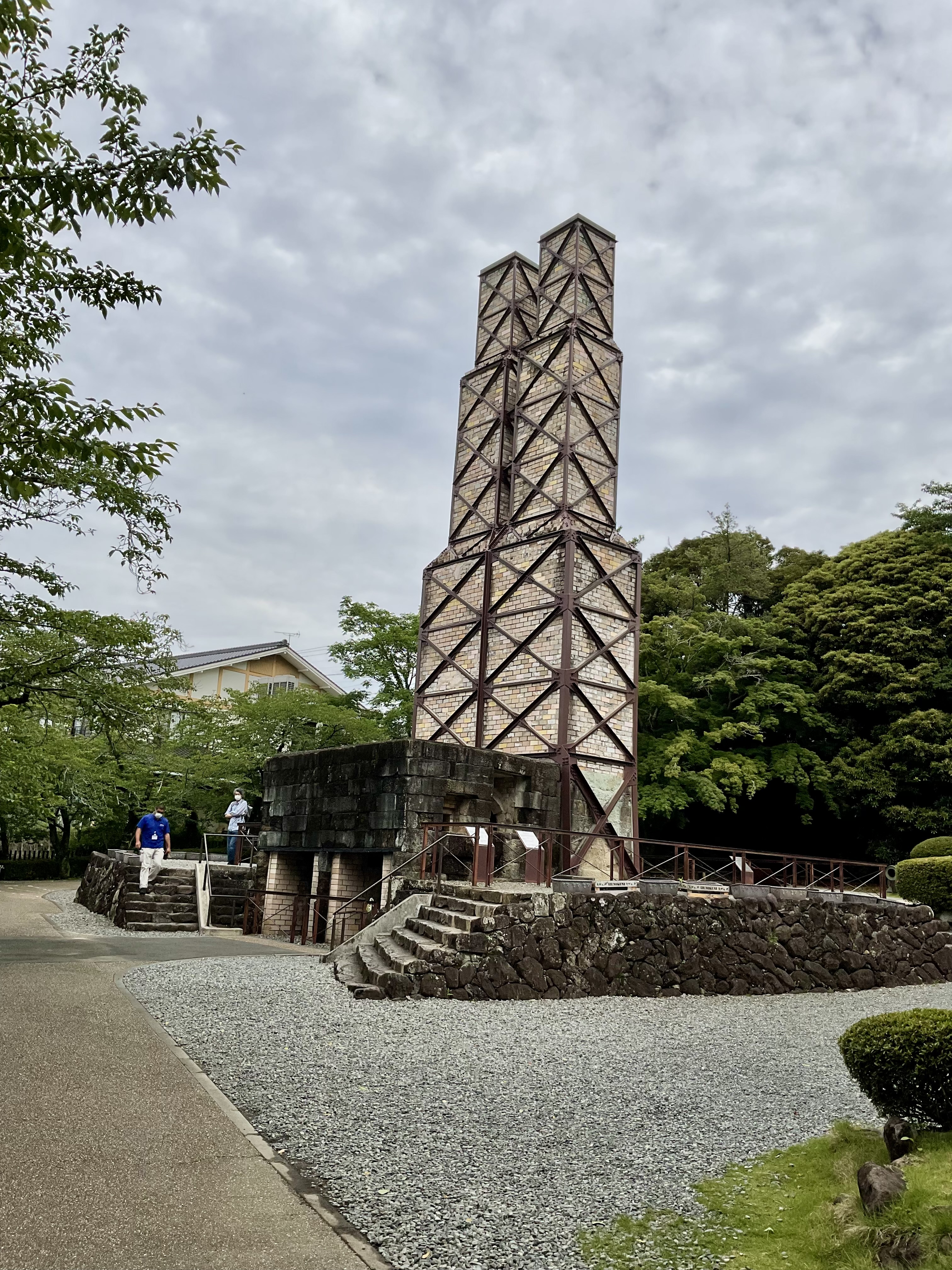
I first heard of this place years ago when one of my students visited with his family and he told me about it. I mistakenly thought it would be difficult to get to without a car. It is less than a 30 minute walk from the Izunagaoka Station. (A reverberatory furnace is a metallurgical process furnace that isolates the material being processed from contact with the fuel, but not from contact with combustion gases.)


This is information from b-izu.com :


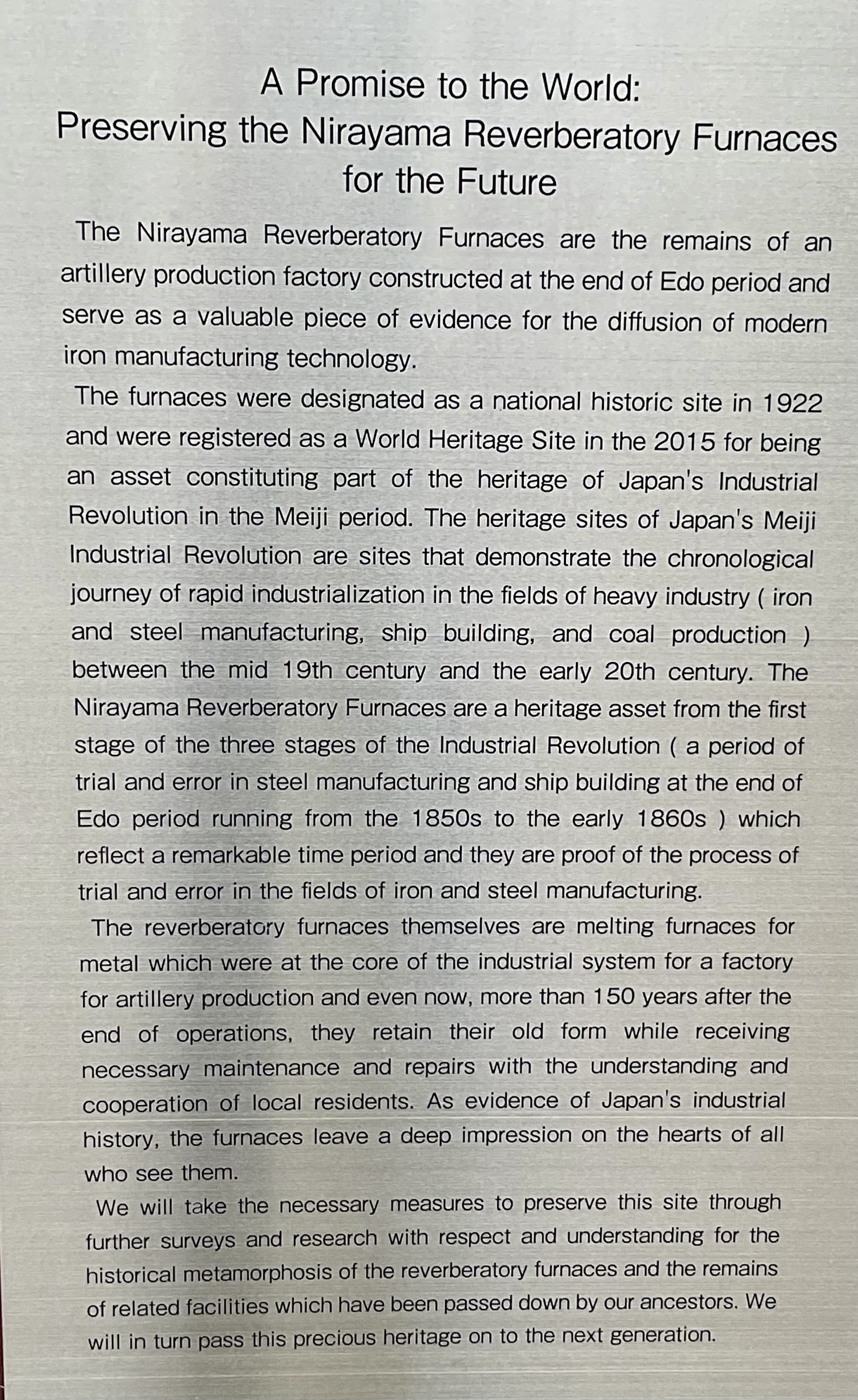
A designated national historical site. It was also designated a heritage of industrial modernization by the Ministry of Trade and Industry. At the end of the Edo period, to protect Japan (Edo) from European and American colonization and the country from being opened, Nirayama prefectural governor Egawa Tarozaemon Hidetatsu advised the shogunate to create the cannon-casting furnace.


The construction started in 1854, and was completed in 1857. It was used to cast hundreds of big and small cannons including for the forts (gun batteries) in the waters near Shinagawa, until usage of the furnace ended in 1864. The name “reverberatory furnace” comes from the structure of the furnace. Heat is reflected (or “reverberated”) off the arched ceiling, producing the melting temperature of iron (1700 degrees or 3092 degrees Fahrenheit).


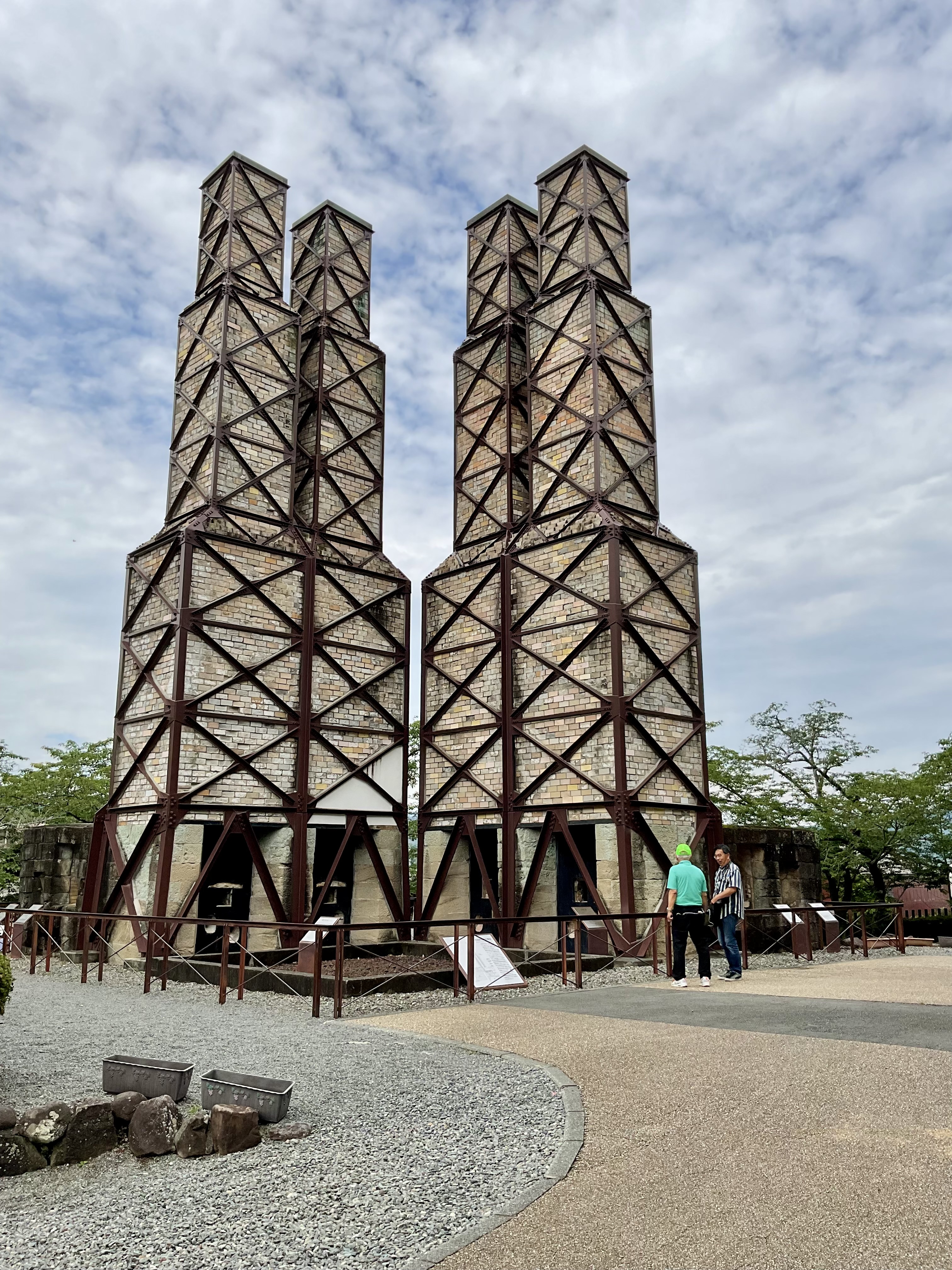
There are 11 reverberatory furnaces in Japan which were constructed for cannon casting, but currently only 3 remain (Satsuma Kyu Shuuseikan reverberatory furnace, the Hagi reverberatory furnace, and the Nirayama reverberatory furnace). The Nirayama reverberatory furnace is of great importance because it is the best preserved, and has been confirmed to have actually been used.


At the guidance center, you can learn about pig iron and tools which were used when the furnace was in operation. You can also watch footage about the Nirayama reverberatory furnace on a big screen.


*In September 2013 the Nirayama reverberatory furnace was among the sites recommended domestically as “sites of Japan's Meiji industrial revolution: Kyushu-Yamaguchi and related areas”.


*In July 2015, the Nirayama reverberatory furnace was one of the constituent assets of the “sites of Japan's Meiji industrial revolution: Kyushu-Yamaguchi and related areas” registered as a UNESCO World Heritage Site.


If you come by car, there is a large parking lot. I bought a dual ticket for both the Egawa Residence and the furnace site for 900 yen. It might be 500 yen for this place alone. It opens at 9:00 am, but you can walk around and look at signs if you arrive early.


Originally there were no bars on the furnaces. They were added later to protect the structures from earthquake damage.


Inside the visitor’s center are various displays and a movie.


After leaving the building, you can go outside to see the furnaces up close.


The surrounding area is set up like a park, with information and places to sit.


With the help of Google Maps, I found my way to various other places on my way to the Egawa Residence and the Nirayama Castle site. Stay tuned for the rest of my day-long visit.