Sunday, July 19, 2020

Japan's National Ainu Museum

Proper distancing

Japan's first national museum dedicated to the northern Japan indigenous Ainu people opened to the public last Sunday after several delays due to the corona virus pandemic. It was originally scheduled to open on April 24th of this year. The new 8,600 square meter museum, located in Shiraoi, Hokkaido, is accepting 2,000 visitors a day on weekdays and 2,500 visitors on weekends.  All visitors must make reservations in advance to reduce the risk of coronavirus transmission. Individual adult tickets are 1200 yen and a one year pass for an adult is 2000 yen. The website is in English, as well as 6 other languages.


In 2008, the government of Japan recognized the Ainu as indigenous people who have their own language, religious and cultural identity. The ethnic minority suffered discrimination and land dispossession beginning in the Meiji Era (1868-1912). They struggled to maintain their culture and were prohibited from speaking their native language. 


photo from the internet


The Ainu also have a decorative needlework technique. I bought several books on the technique when I visited the Ainu Exhibit at the Art Museum in Sapporo, and saw examples at the Ainu Festival in 2016.  In 2014, I visited the Ainu Village at Akan Lake and in 2013 visited Pirka Kotan Ainu Culture Center. My first exposure to the Ainu, was at the Ainu Museum in Sapporo in 2012. 


I've just started a small new project using this technique and will have photos to show soon!

Saturday, July 18, 2020

Fish in my Mailbox

I get advertisements in my mailbox more than I get real mail.  A common way to advertise in Japan is with little packets of tissues. I'm not interested in the offers that came with the tissues, but the packet of tissues with the little fish are so cute!


Friday, July 17, 2020

Friday Finish - Scarf Snowman Ornament

I finished this little cross stitch into an ornament. It was a free chart from balades-et-broderies.over-blog.com. I made the twisted cording from Petite Treasure Braid.


Thursday, July 16, 2020

Train Manners with Snow White

Seen at a station on the Toei Subway line in Tokyo. (No, I didn't go to Tokyo).


I love seeing these manner reminders in Japan!


Wednesday, July 15, 2020

Work In Progress Wednesday - A New Project

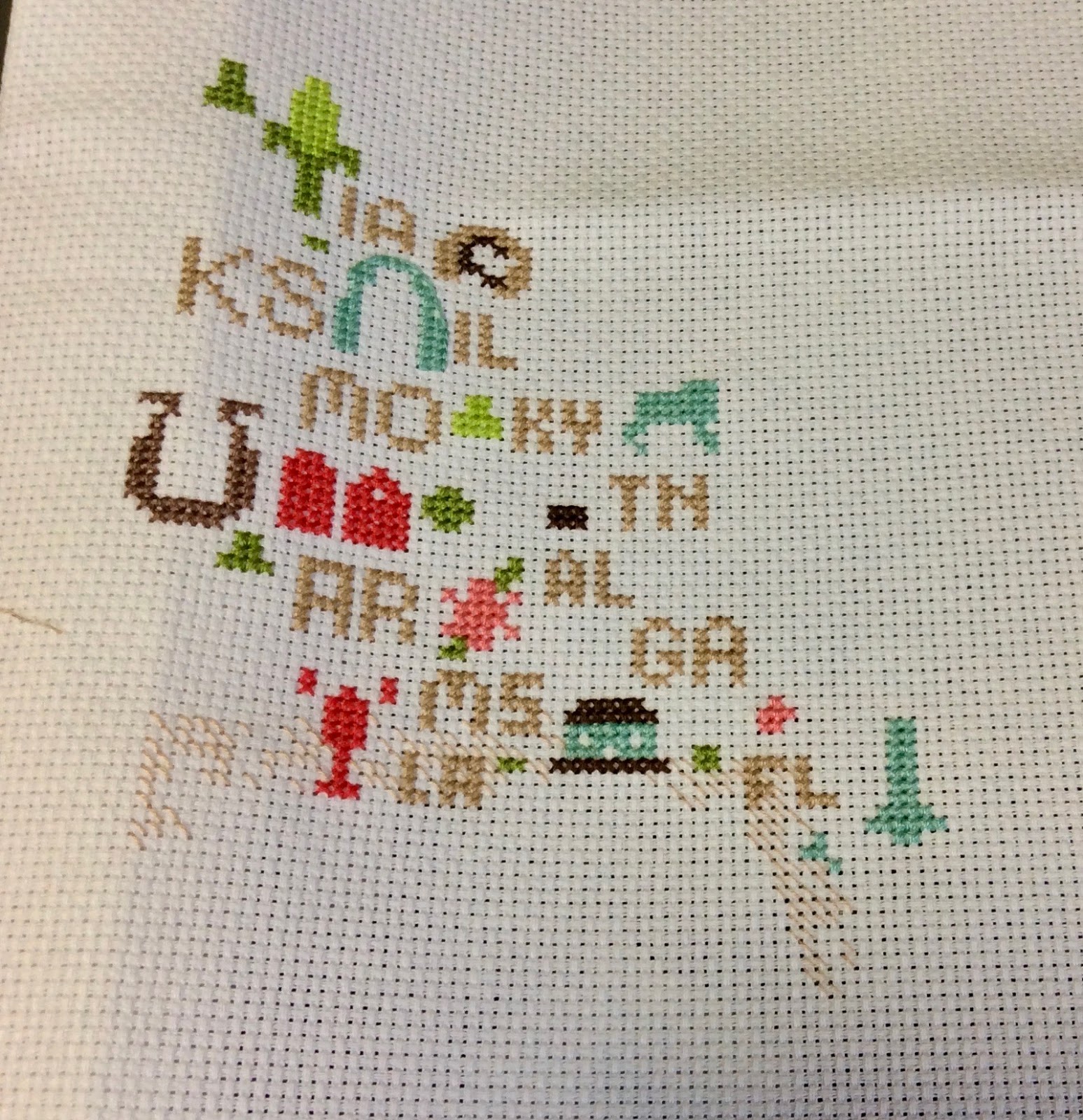
I've had this USA map cross stitch kit for some time now and decided to start working on it. It doesn't look like much yet.


Tuesday, July 14, 2020

JR East Half Price Shinkansen Tickets


The travel industry has been hit hard since the pandemic began earlier this year. Travelers from 129 countries aren't welcome right now, so Japan's travel companies are looking to its own citizens.  Japan Railways East (JR East) is offering half price Shinkansen (bullet train) tickets from August 20, 2020 to March 31, 2021 on 11 different routes.


● Hayabusa: To/from Tokyo Station and Morioka (Iwate Prefecture)
● Hayabusa: Tokyo and Shin-Hakodate-Hokuto Station (Hokkaido)
● Yamabiko: Tokyo and Fukushima
● Nasuno: Tokyo and Nasushiobara (Tochigi)
● Komachi: Toyko and Akita
● Tsubasa: Tokyo and Shinjo (Yamagata)
● Toki: Tokyo and Jomo-Kogen (Gunma)
● Tanigawa: Tokyo and Niigata
● Asama: Tokyo and Nagano
● Kagayaki: Tokyo and Kanazawa (Ishikawa)

Tickets must be reserved online through the official JR East website between 20 days and one month ahead of the date you intend to ride.  This sounds like a great deal.  I hope I will feel it is safe to travel soon and can take advantage of the discount.


Monday, July 13, 2020

Monday Morning Star Count - Week 10

Year Four of the temperature quilt  

Week 10 

June 28 - July 4 

75, 82, 79, 79, 88, 81, 72


I am reporting the high temperature each day.  My Year Four temperature/color (Fahrenheit) scheme remains the same: 

100 + Brown 

90-99 Red  

80-89 Orange 

70-79 Yellow  

60-69 Green  

50-59 Blue 

40-49 Purple 

30-39 Pink 

20-29 White 

10-19 Black  

You can see my finished Year One Quilt here.

Sunday, July 12, 2020

The Rainiest Season

Japan, except for Hokkaido, has a rainy season, called Tsuyu, every year between late May and late July.  The wet weather is caused by cold winds from the north colliding with warm southern winds.  Where I live, the average dates for the rainy season is June 8th to July 21st. 


The first year I lived here in Shizuoka, it hardly rained during the rainy season.  I was still asking when will the rainy season start, after it had ended. This year seems to be the rainiest rainy season ever.  Every day I am wet walking to work and wet walking home.  The laundry never seems to dry.  All of this is inconvenient for me, but is really nothing compared to what is happening in Kyushu, the southern most of the four main Japanese islands. Some people have been evacuated from their homes, while others are stranded by the deadly floods and mudslides. Yesterday I read the death toll was 66 and 16 were still missing.


Over 300 millimeters of rain has fallen through Saturday and it is still raining. The Japan Meteorological Agency issued its second highest evacuation order to more than 450,000 people, but such orders are not compulsory and most residents are choosing not to go to shelters because of coronavirus fears.   It is difficult to ensure the safety of those in emergency centers, but the centers are doing what they can. 


The company where I work makes large commercial air conditioners.  Last week the company donated five of these large units to shelters in Kumamoto prefecture in Kyushu and quickly had them delivered and installed. I am in awe of the generosity of Japanese people and companies even in these poor economic times. 


Every day I am thankful to be living in Japan for so many reasons. There is no where I'd rather be, even in the rainiest season.


Saturday, July 11, 2020

Ninja Studies Graduate Degree


Central Japan's Mie University is offering a master's degree in Ninja Studies. To enroll in the program, prospective students have to take an exam on Japanese history and a reading test on historical ninja documents. Only about three students a year enroll in the program, although there are many inquiries from overseas.


The program's first graduate is 45 year old Genichi Mitsuhashi.  He read that ninjas worked as farmers in the morning and trained in marial arts in the afternoon, so he grew vegetables, honed his martial arts techniques, and spent many hours in the classroom with ninja studies. Mitsuhashi teaches ninja skills at his own dojo and runs a local inn while pursuing his PhD. 


Would you be interested in this ninja program?  I imagine you have to be in great physical shape as well as be able to read and write Japanese. It does sound interesting though.

Friday, July 10, 2020

Friday Finish - Mediterranean Treasure Bracelet

This bracelet was one of the projects from last fall's Mediterranean Cruise with needlework teacher and designer Sandy Arthur. 


These are the components of the bracelet, according to the instruction booklet: 

The Maltese Cross represents our visit to Malta. Bordering each side of the Maltese cross is a triskelion motif consiting of a triple spiral, which is a traditional symbol of Sicily. Blue lines represent the water and the white background stitched in a small bargello pattern represents the water of the Mediterranean Sea.


I'm happy to finish this.


Thursday, July 9, 2020

Most Popular Cat Types and Names in Japan

Are you a cat lover? You might find this information interesting.


It is estimated that 99.5% of Japanese cats are exclusively indoor pets. (Source Anicom Pet Insurance). I sometimes see cats without owners, but not as often here as in the US or other countries.  Kittens are very expensive at the pet store. 


The most popular cat breeds in Japan in 2020 are - - - 

1. Scottish fold 18.1%

2. Munchkin 11.2% 

3. American shorthair 9.9%

4. Mixed breed 9.4%

5. Norwegian forest cat 7.3%

6. British shorthair 6.5%

7. Ragdoll 5.0%

8. Bengal 4.5%

9. Maine coon 3.4%

10. Russian blue 3.3%  


The Scottish fold was the most popular breed in Japan for the twelfth year in a row.  The top three: the Scottish fold, Munchkin, and American shorthair are so popular that they account for almost 40% of all cats owned in Japan. 


The overall top five cat names in Japan are Mugi (wheat), Leo, Sora (sky), Maru, and Coco.  For female cats the top five names are Momo (peach), Mugi, Coco, Rin, and Kinako.  For male cats, the top five names are Leo, Sora, Maru, Kotetsu, and Mugi. 


What are popular names for cats in your country?


    Wednesday, July 8, 2020

    Work In Progress Wednesday - Mistakes and Little Things

    I made a counting mistake on the sampler, so it is currently in time out.  


    Here are some little things I've been stitching.


    Tuesday, July 7, 2020

    Japanese Professional Baseball 2020

    Like some other major sports around the world, Japanese professional baseball started up this year with empty stands due to the coronavirus. After a three month delay, the first games were played June 19th. Players are being tested frequently and so far there have only been a small number of postive results.

    This year the season has been reduced to 120 games per team, with a shortened playoff season, too.


    According to a survey conducted by Waseda University, the majority of fans in Japan are fine with the measures to conduct games without spectators at the stadiums.  Limited number of spectators may be able to attend after mid-July. 


    What are professional sports like in your country this summer? Games being held? Spectators?


    Monday, July 6, 2020

    Monday Morning Star Count - Week 9

    Year Four of the temperature quilt  

    Week 9 

    June 21 -27 

    75, 70, 79, 75, 73, 84, 84


    I am reporting the high temperature each day.  My Year Four temperature/color (Fahrenheit) scheme remains the same: 

    100 + Brown 

    90-99 Red  

    80-89 Orange 

    70-79 Yellow  

    60-69 Green  

    50-59 Blue 

    40-49 Purple 

    30-39 Pink 

    20-29 White 

    10-19 Black  

    You can see my finished Year One Quilt here.

    Sunday, July 5, 2020

    Japan's Travel Ban


    Recently, I've been reading about countries that are now opening up to travelers from other countries (as well as keeping others out). Japan is keeping people out for the time being. Just this past week Japan added 18 more nations to its no-entry list, bringing the total number to 129. Anyone who is not a Japanese citizen and has been to any of these countries in the past 14 days, will not be allowed to enter Japan.  


    Here are all the countries countries affected by Japan's travel ban.


    Asia Pacific: Australia, New Zealand, Bangladesh, Brunei, China (including Hong Kong and Macau), India, Indonesia, Republic of Korea, Malaysia, Maldives, Pakistan, Philippines, Singapore, Taiwan, Thailand, Vietnam.
    North America: Canada, United States of America. 
    Latin America and the Caribbean: Argentina, Antigua and Barbuda, Bahamas, Barbados, Bolivia, Brazil, Chile, Colombia, Costa Rica, Cuba, Dominica, Dominican Republic, Ecuador, El Salvador, Grenada, the Grenadines, Guatemala, Guyana, Haiti, Honduras, Jamaica, Mexico, Nicaragua, Panama, Peru, Saint Kitts and Nevis, Saint Vincent and the Grenadines, Uruguay.
    Europe: Albania, Andorra, Armenia, Austria, Azerbaijan, Belarus, Belgium, Bosnia and Herzegovina, Bulgaria, Croatia, Cyprus, Czech Republic, Denmark, Estonia, Finland, France, Germany, Georgia, Greece, Hungary, Iceland, Ireland, Italy, Kazakhstan, Kosovo, Kyrgyzstan, Latvia, Liechtenstein, Lithuania, Luxembourg, Malta, Moldova, Monaco, Montenegro, Netherlands, North Macedonia, Norway, Poland, Portugal, Romania, Russia, San Marino, Serbia, Slovakia, Slovenia, Spain, Sweden, Switzerland, Tajikistan, Ukraine, United Kingdom, Vatican City.
    Middle East: Afghanistan, Bahrain, Israel, Iran, Iraq, Kuwait, Lebanon, Oman, Qatar, Saudi Arabia, Turkey, United Arab Emirates.
    Africa: Algeria, Cabo Verde, Cameroon, Central Africa, Cote d’lvoire, Democratic Republic of Congo, Djibouti, Egypt, Equatorial Guinea, Eswatini, Gabon, Ghana, Guinea, Guinea-Bissau, Mauritania, Mauritius, Morocco, Sao Tome and Principe, Senegal, South Africa.

    Currently, I only travel to work and to the grocery store by foot, but I do hope to be able to travel again sometime. How about you?  Can you travel outside of where you live? Do you want to travel now or in the future again?


    Saturday, July 4, 2020

    The People's Choice SAL - Most Popular Designer


    Jo at Serendipidous Stitching is hosting a Stitch A Long the first Saturday of the month, with the topics chosen by her readers.  This month's topic is "Most Popular Designer". 


    The word Most means just one. I'm not really a super fan of any one designer, but I have stitched more than one design from several designers. Maybe these are the most popular designers with me.  So here goes --  


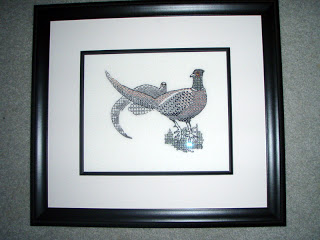
    Tanja Berlin - I've stitched three of her blackwork designs. I took the pheasants class with her at an EGA National Seminar and stitched the other two on my own.


    Dorothy Lesher - I've stitched three of her dragons. I think I took the Sundragon class with her at an EGA National Seminar, and the Dragonmaster at Calloway School of Needlearts.  The Moondragon was on my own.


    Lynn Payette - both of these were classes at guild seminars.


    Deanna Powell - both the beaded bag and the beaded shawl were classes at EGA National Seminars.


    Denise Harrington Pratt - The box and the little toolies were a class at a regional EGA seminar, the small box kit and the many fobs were done on my own. I have no idea how many fobs I have made, but these are a few I have posted about on my blog.


    Marion Scoular - the bee hardanger/blackwork piece was a class. The others were done on my own.