Last Friday was a beautiful day - sunny and breezy. I decided to walk to Kunozan Toshogu Shrine and climb up the stairs. I had visited this shrine years ago with two friends. One friend drove us to the parking area at Nihondaira and we took the ropeway to the Shrine area. I wrote about that 2016 visit here.
So, last week I walked two hours to get to the bottom of the steps leading to the shrine area. My route led me to walk between the sea and the strawberry farms.
There were a few people walking up the steps but not so many.
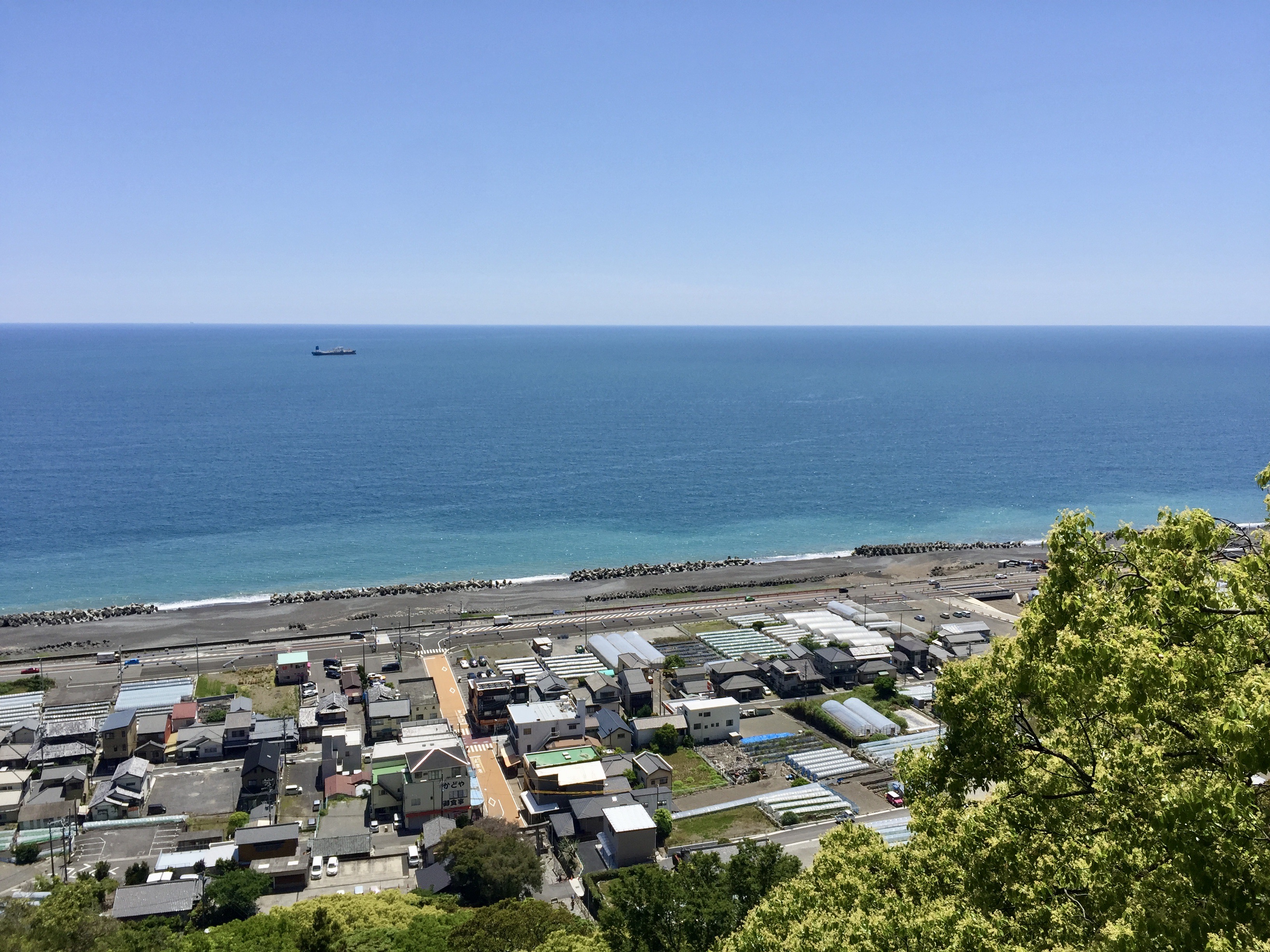
At the start the steps were not steep, as you can see looking back.
The steps went back and forth and I couldn't see the top.
Every so often, there would be a sign to show how far you've come and still have left. Here I was at step 340 of 1159.
Sometimes, I looked back.
A big door! I thought I must be there, but not yet.
I needed to go higher...
This is the entrance, where I paid 800 yen for a combined ticket to the shrine and the museum. (Photos not allowed in the museum).
The shrine has a history of over 400 years, and enshrines Lord Tokugawa Ieyasu, who founded the Tokugawa Shogunate in 1603, which brought peace to Japan for 265 years. The beautifully decorated shrine buildings were designated as a National Treasure in 2010.
Yes, there were many more steps inside the shrine area.
History of the Shrine
Lord Tokugawa Ieyasu (1542-1616) endured many hardships in his youth before becoming the first Tokugawa shogun in 1603. He retired as Shogun in 1605, and spent the remainder of his days in Sumpu, the current Shizuoka City. He passed away on the 17th of April in 1616 at the age of 75.
Before his death Ieyasu had instructed his retainers to bury his remains at Kunozan. Ieyasu’s successor, the second Shogun, Tokugawa Hidetada carried out Ieyasu’s instructions and ordered a shrine to be built to enshrine Tokugawa Ieyasu.
A master carpenter named Nakai Masakiyo was chosen to build the shrine. Construction started in May of the year of Ieyasu’s death and the shrine was completed within a year and seven months. The shrine was built using the finest craftsmen of the time and became a model for other Toshogu shrines all over Japan, including the Nikko Toshogu Shrine. Other examples of Nakai Masakiyo’s workmanship include such important historical structures as Nagoya Castle (a nationally designated important historic site), and in Kyoto Ninnaji Temple (a National Treasure and World Heritage Site) and Nijo Castle (a National Treasure and World Heritage Site). The Kunozan Toshogu shrine is considered a masterpiece of Nakai Masakiyo’s later years and was designated as a National Treasure in 2010.


It seems like all shrines and temples have some incredibly old sacred tree.
This is where some of the remains of Tokygawa Ieyasu are. The rest are at the Toshogu Shrine in Nikko, where I visited in 2019.
It was time to start back down the stairs.
On my way home, I stopped for lunch at kaiten sushi, so the walk was longer going home. I was tired, but happy after a good day.