Showing posts with label HiroshimaPrefecture. Show all posts

Sunday, May 21, 2023

G7 Meet in Japan


(Photo from Japan Today)


As you probably know, the Group of Seven is meeting in Hiroshima, Japan. Japan's Prime Minister Kishida's family is from Hiroshima. It was also chosen to highlight nuclear nonproliferation efforts in a time when there are threats and the possiblity of nuclear aggression in the world.  PM Kishida greeted the leaders from the G7 at the city's Peace Memorial Park on Friday and escorted them to pay respects to those who died. In addition, the group saw exhibits at the Peace Museum and met with an atomic bombing survivor. Sunday the Prime Minister will do the same for leaders from guest nations. I hope that seeing in person what nuclear weapons can do, will make a difference in the direction these world leaders take.


Photo taken by me in December 2021

Saturday, January 22, 2022

Hiroshima Castle

 After leaving Mihara, I continue to Hiroshima City. It was getting late in the afternoon, but I still had time to take in the Castle.  Photos were not allowed inside.


History Notes from JCastle - - -


Hiroshima-jo was built by Mori Terumoto in 1591. Mori Terumoto was a very powerful daimyo who controlled the vast majority of the San'in and San'yo areas. Having outgrown his Yoshida-Koriyama castle he built a new castle at Hiroshima in 1599. Mori Terumoto aligned himself with the Western forces in the Battle of Sekigahara (1600). The Western forces lost and Mori's lands were confiscated. He was then appointed to govern most of what is modern day Yamaguchi prefecture. 

One of Hideyoshi's former allies, Fukushima Masanori filled Terumoto's place at Hiroshima. After Fukushima was stationed in Hiroshima, it's said that he got nostalgic for his old days under Hideyoshi. Needless to say, this did not sit well with the Tokugawa. In 1617 a great flood caused much damage to Hiroshima-jo. Fukushima petitioned the Tokugawa government for permission to fix it but he never received an answer. According to Tokugawa law, all daimyo needed permission to build, rebuild or renovate any castle. The only reply Fukushima got from the Tokugawa was "under investigation" and permission never came. 

Two years later he proceeded on his own and started to fix the flood damage. Fukushima was caught in a Tokugawa trap. Since he defied their laws, they took away his lands around Hiroshima and gave him a smaller, less profitable province in modern day Nagano prefecture. 

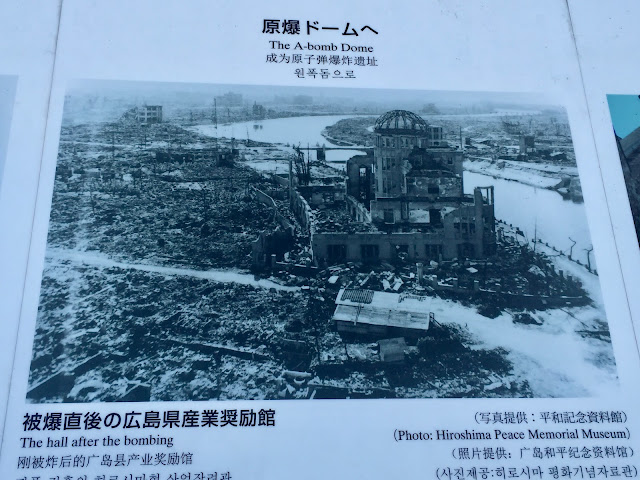
Hiroshima-jo lasted through the Meiji Restoration and was named a National Treasure in 1931 only to be destroyed by the atomic bomb in WWII.


If you are interested in Japanese Castles, you can find links to other castle visits I've made on my Japanese Castle page.

Thursday, January 20, 2022

Mihara Castle Ruins

I really liked these yellow trains in Hiroshima Prefecture.


After leaving Fukuyama Castle, and continuing in Hiroshima Prefecture I made a stop at Mihara Station. This Octopus shrine is inside the station.  


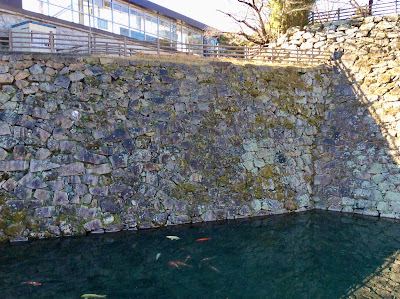
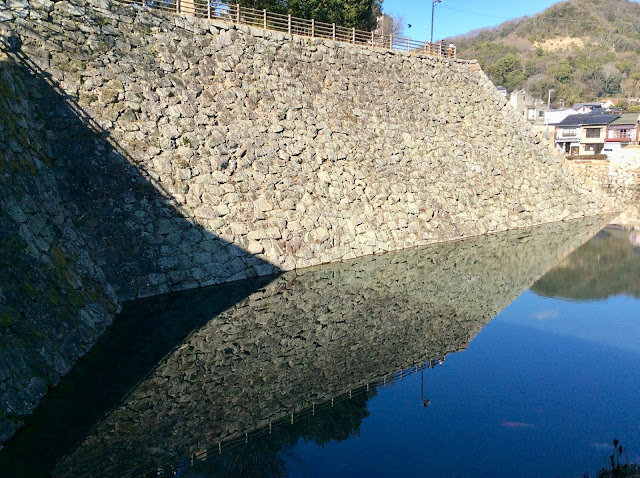
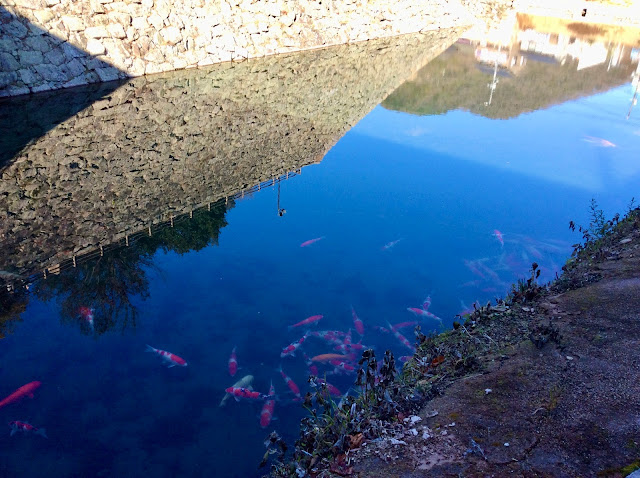
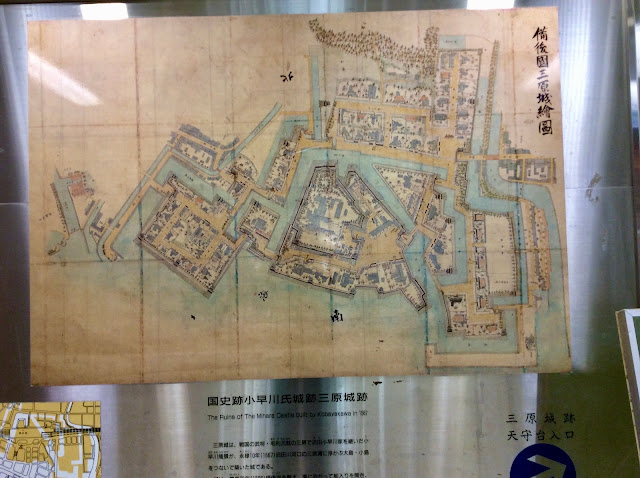
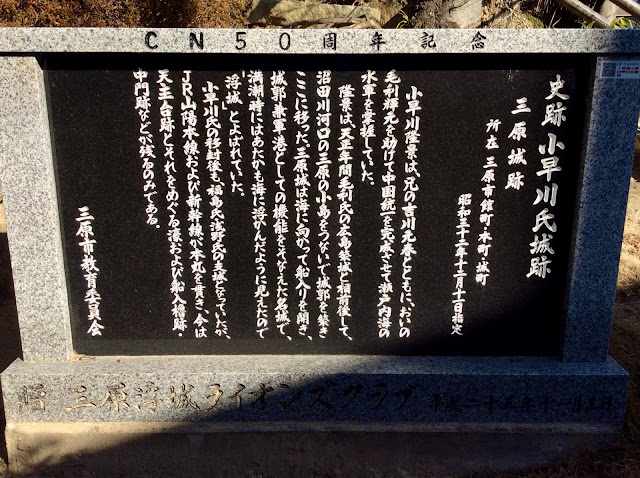
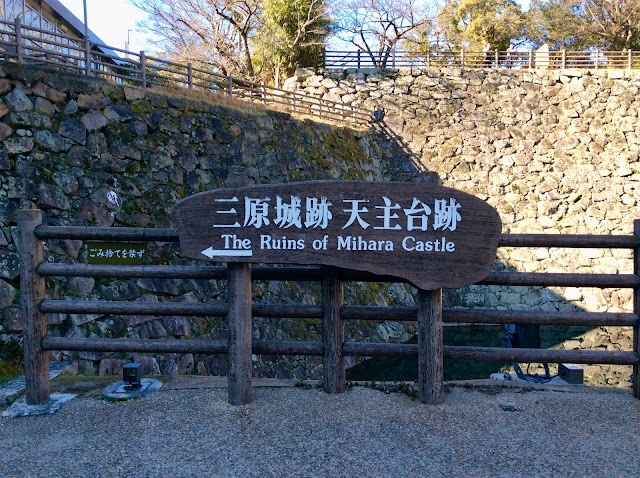
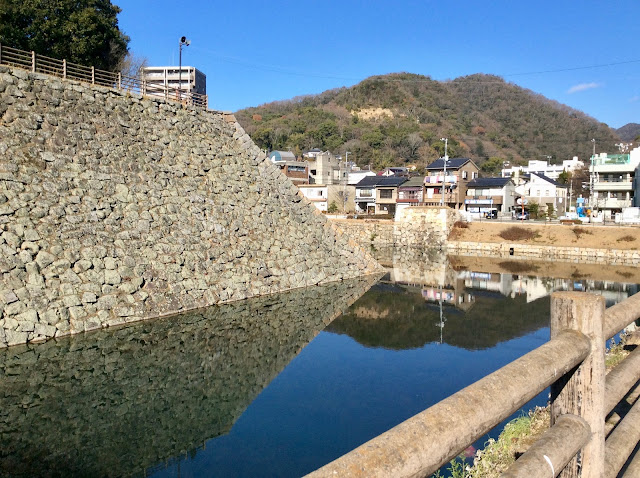
The train station runs right through the former castle site, which mostly consists of stone walls and the moat.


From JCastle - - - 

Kobayakawa Takakage built this large scale castle with 3 baileys, 32 sumi yagura (corner yagura), and 14 gates. It was built on the coast and connected two islands giving rise to the nickname Ukishiro, or "floating castle." Kobayakawa moved from Shin Takayama Castle, a typical mountaintop castle, to this site to better manage the Mori's sea forces and to help protect from Oda Nobunaga who was advancing from the East.

The third son of Mori Motonari, Kobayakawa Takakage was responsible for developing the naval forces which took part in the subjugation of Kyushu, Shikoku, Odawara and also took part in the advances on Korea. 

After Hideyoshi conquered Kyushu, Kobayakawa was rewarded with more lands in Chikuzen, Chikugo and Bizen. He moved to Najima Castle in the East of Fukuoka and renovated much of Najima castle, which was also a seaside castle. In 1595 after handing over the Chikuzen and Chikugo to his son, he retired to Mihara Castle where he died in 1597. 

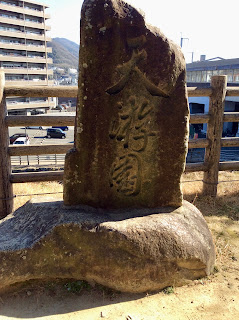
The tenshu foundation of Mihara Castle was the largest ever built, similar in size to that of Edo castle, but the main keep was never actually built. Mihara Castle escaped demolition during the Meiji Period so that it could be used as Imperial naval base. It was later decommissioned and Mihara Train Station was built on the site in 1894. At this time all the buildings were destroyed and much of the stone walls torn down. The honmaru was further cut to make way for the bullet train in 1975.


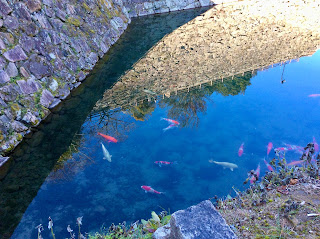
It was a beautiful day and I was able to get some reflection photos.


The day is early yet and I am on to the next castle.


If you are interested in Japanese Castles, you can find links to other castle visits I've made on my Japanese Castle page.

Tuesday, January 18, 2022

Fukuyama Castle

On January 2nd, I left Okayama and traveled to Hiroshima Prefecture. Fukuyama Castle was next on the schedule.  


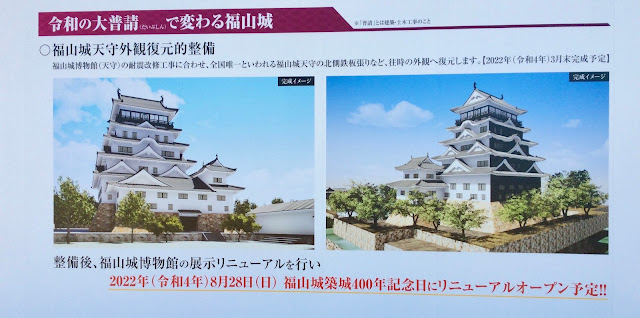
It was close to the train station and was undergoing some reconstruction, getting ready for its 400th anniversary.


Some history notes from Jcastle.com


In 1619, Mizuno Katsunari, a cousin of Tokugawa Ieyasu, was the first of the Tokugawa hereditary vassals (fudai daimyo) to be stationed in the Chuugoku region. He was placed here at Fukuyama to be just between the non-hereditary vassals (tozama daimyo) in Hiroshima and Okayama. He received great support from the Tokugawa in the form of money, materials and buildings transferred from Fushimi Castle to build this rather large and strong castle (23 yagura and 10 gates) quickly. It shows the importance Tokugawa placed on showing his strength to these tozama daimyo. The castle was completed in 1622. 

Fukuyama Castle was one of the greatest castles of the Edo Period and many buildings survived the Meiji Restoration, but were mostly destroyed in the air raids of 1945. Only the Fushimi Yagura and Sujigane Gate survived.


Statue of Mizuno Katsunari, First Feudal Lord of the Fukuyama-han Domain


Statue of Abe Masahiro, Seventh Generation of the Abe Clan and Feudal Lord of the Fukuyama-han Domain


This was the first castle of my day.  More to come.


If you are interested in Japanese Castles, you can find links to other castle visits I've made on my Japanese Castle page.