Pages
- Home
- Japanese Castles
- Take A Stitch Tuesday
- Stitching Finishes 2026
- Stitching Finishes 2025
- Stitching Finishes 2024
- Stitching Finishes 2022
- Stitching Finishes 2021
- Stitching Finishes 2020
- Finish It in 2019
- Stitching Finishes 2018
- Stitching Finishes 2017
- Stitching Finishes 2016
- Stitching Finishes 2015
- Stitching Finishes 2014
- Stitching Finishes 2013
- Stitching Finishes 2012
Showing posts with label Teaching English. Show all posts
Tuesday, November 7, 2023
Thursday, June 8, 2023
The Flower Cake
One of my students, who is from China, gave me this little treat. (Thank you, Daisy!) I don't know what the Chinese says, but the little English label says flower cake. I wish I had taken a picture of the treat, but I didn't think of it at the time. It had a flaky crust and a thick red filling. It smelled incredible, just like real roses. Have you ever eaten anything like this?
Sunday, May 14, 2023
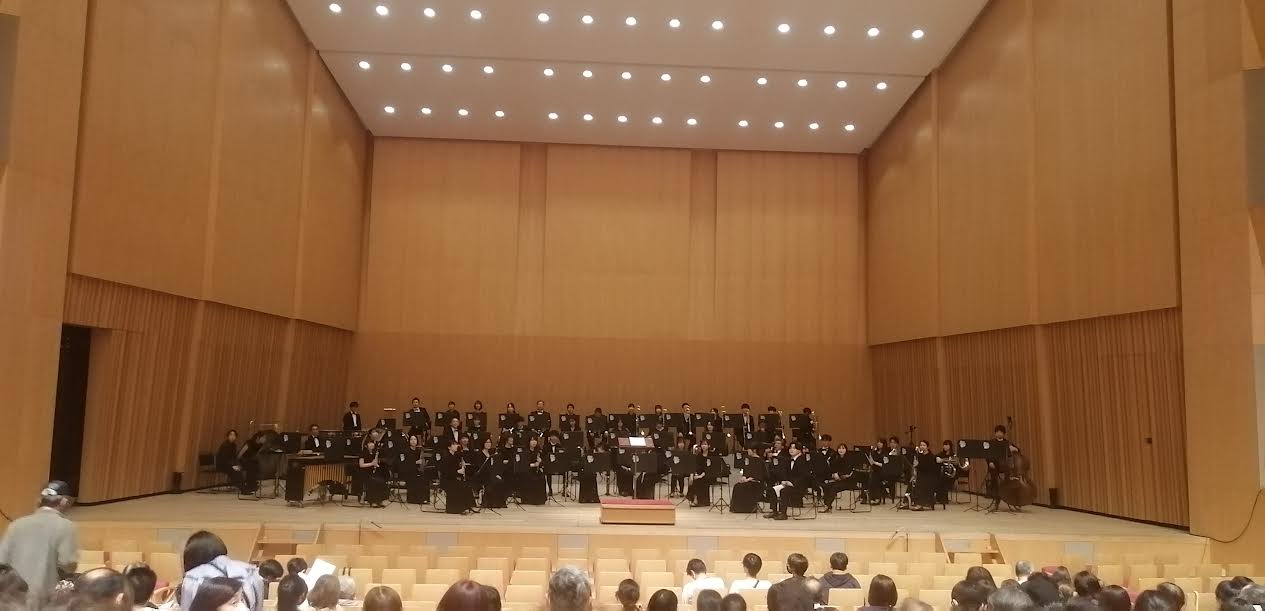
Orchestra Concert
Last Sunday I attended the orchestra concert of a flute playing English student. I thoroughly enjoyed it and am so happy I could attend!
Friday, December 2, 2022
McDonald's Japan World Cup Sandwiches
Yesterday one of my students told me about this year's three special FIFA World Cup tournament sandwiches at McDonald's. Maybe McDonald's all over the world are serving these special sandwiches, I don't know. I didn't even know the fast food restaurants in Japan were selling them. My students tell me many things I don't know about.
They are inspired by the 2002 Japan-Korea World Cup, the 2014 Brazil World Cup and this year's Qatar World Cup - the Koku Umami Karubi Mac, the Wild Beef Burger Onion Rings & Cheese, and the Kebab-style Chicken Burger.
My student ate the Kebab Burger and the thing he liked best about it was that the bun was made to look like a soccer ball. The price of the burger is 440 yen, which he thought was expensive.
Have you tried any of these World Cup specials? What did you think? If you haven't, would you like to try them?
Tuesday, November 22, 2022
Who Can Afford to Smoke Cigarettes?
One of my students told me he quit smoking because of the high cost, now 600 yen a pack. He asked me how much cigarettes cost in the US. I have never been a smoker, so I didn't even know how much they cost when I lived in the US, but I really don't know now, almost eleven years since I've even been in the United States. We checked Google and looked at this website for information.
The average cost of a pack of cigarettes in the United States is $8.00/pack, with average prices per pack ranging from $6.11 in Missouri to $11.96 in New York. Eleven states and the District of Columbia have an average price above $10 per pack!
The states with the highest cigarette prices are:
- New York ($11.96)
- Rhode Island ($11.71)*
- Connecticut ($11.60)
- Massachusetts ($11.11)
- Minnesota ($10.49)
- Alaska ($10.46)
- Hawaii ($10.41)
- Maryland ($10.26)
- Illinois ($10.60)
- Washington ($10.14)
- Vermont ($10.12)
*Were the District of Columbia included in this metric, it would have the nation’s second-most expensive pack price at $11.75.
The state I moved from is North Carolina, the fourth lowest, where a pack averages $6.58. Only three other states have cheaper cigarettes - North Dakota, Georgia, and Missouri.
My student didn't understand the big differences in the prices between states. In the US, each of the 50 states has its own laws and taxes, among other things. A smoker buying cigarettes in New York pays $4.35 in taxes, in North Carolina, $0.45 and in Missouri, only $0.17!
Really? Who can afford to smoke anywhere?
Saturday, April 16, 2022
New! Online English School - Brush Up!
My friend just started her own online English School. If you (and/or someone you know) are interested in improving your English skills, please check out her website (link below). She has years of English teaching experience and can help you reach your language goals.
Mayumi Shimizu, a part-time English teacher at two private universities in Japan opened her own online English school. The first class she offers is TOEIC target 600 course. Here is the link for her homepage.
https://brushu-english.com/
Sunday, February 20, 2022
It is so Important to Use the Correct Words
Being a language teacher, I am very interested in words and how they are used. I read a sad story on The Guardian website about thousands of Catholic baptisms which were invalidated because the priest used the wrong word when performing the baptism ceremony.
Father Andres Arango resigned from the St. Gregory parish church in Phoenix this month after diocese leaders discovered he had for years mistakenly used the phrase "We baptize you" instead of "I baptize you". I'm not Catholic, so I didn't know this, but maybe the people in his church didn't either. The article states that baptism is an irrevocable requirement for salvation in Catholic theology. An invalid baptism invalidates any subsequent sacraments, especially confirmation, marriage, and holy orders. His error means that countless baptisms will have to be performed again and some in his parish will find that their marriages are not recognized. The priest regrets his error and asks forgiveness, while the Bishop of Phoenix asks churchgoers to pray for the priest and all those impacted by the unfortunate situation. The Vatican affirms that using the word "We" in place of the word "I" invalidates the ceremony.
Father Arango was born in Brazil, became a priest in 1995, and moved to the US in 2001, so I am assuming English is not his first language. Some of my vocabulary lessons include what I call "confused words", such as affect-effect, assure-ensure-insure, complement-compliment, loose-lose, etc. Although I hope that my students will learn and use the correct word, if they don't, the mistake is minor compared to Father Arango's mistake.
Friday, February 11, 2022
Pandemic Statistics
I saw these charts from the New York Times and found them interesting.
The first one is cumulative deaths per capita during the omicron wave. Japan is very low so far. I realize omicron isn't over yet and started later in Japan than in some other places.
The second is cumulative deaths per capita throughout the pandemic. Again, Japan is quite low.
I used this as a talking exercise in some of my English classes. My students like to give their opinions on different topics.
Most of my students are certain it is because people in Japan always wear masks. Playing devil's advocate, I point out that we don't know for sure how careful other countries are with mask wearing. (Maybe we have an idea about some countries). A few of my students said Japanese people may have been exposed to other previous corona viruses and have some immunity as a result. That sounds like an interesting reason and may be true, I don't know. Also, a high percentage of people in Japan have had two vaccination doses, and the third booster shots are now rolling out.
Personally, I think all three may be reasons, but in addition, it may be due to cultural reasons. Japanese people are considerate of others and have a team or community way of thinking, instead of an individual freedom way of thinking. Japanese law does not permit "lockdowns" like the kind used in many other countries. Instead, we are under "quasi state of emergency" when the number of infections get high. This means the government asks people to stay home if they can, not to travel into other prefectures, and for restaurants to close earlier than usual and not to serve alcohol. And the thing is, most people do it! It is getting harder as the pandemic continues, but in Japan, there are no mask or vaccination mandates or violence like I see on the news from other places. I'm thankful to be in this safe place.
Is your country represented on these two charts? What do you think?
Thursday, December 2, 2021
Merriam Webster's Word of the Year 2021
(You can read the full story on all the words here).
It was no surprise to find out that Merriam Webster's word of the year for 2021 was Vaccine. Vaccine comes from the latin word for "cow", vacca, because the term was originally used to refer to inoculation using doses of cowpox, which protected humans against smallpox. This relatively new English word dates to the 1880's.
Other top words for look ups in 2021 on the Merriam Webster site include the following.
Insurrection - which means an act or instance of revolting against civil authority or an established government. This word came to English from French.
Perseverance - defined as continued effort to do or achieve something despite difficulties, failure, or opposition, coming from Latin.
Woke - a new word originating in African American English, defined as aware of and actively attentive to important facts and issues (especially issues of racial and social justice).
Nomad - referring to a member of a people who have no fixed residence, who move from place to place, usually seasonally; or more bradly to someone who roams about. This word comes from Latin and Greek.
Infrastructure - came to English from French and dates to the mid-20th century. It means underneath or below the structure.
Cicada - is defined as any of a family (Cicadidae) of homopterous insects which have a stout body, wide blunt head, and large transparent wings, and is from Latin.
Murraya - which spiked in lookups after the Scripps National Spelling Bee in July, is a genus of tropical Asiatic and Australian trees having pinnate leaves and flowers with imbicated petals.
Cisgender - defined as of, relating to, or being a person whose gender identity corresponds with the sex the person had or was identified as having at birth.
Guardian - one that guards; custodian, from Middle English. This word jumped in look ups when Cleveland's American League baseball team chose it as their new name.
Meta - defined as showing or suggesting an explicit awareness of itself or oneself as a member of its category; cleverly self-referential. This is Facebook's new name and is a still-emerging term.
Past Words of the Year include:
2020 - Pandemic; 2019 - They; 2018 - Justice; 2017 - Feminism; 2016 - Surreal; 2015 -ism; 2014 - Culture; 2013 - Science; 2012 - Socialism; 2011 - Pragmatic; 2010 - Austerity; 2009 - Admonish; 2008 - Bailout.
Isn't language interesting?
Thursday, July 1, 2021
English Words with Japanese Meanings
Japanese has three sets of characters - Hiragana, Katakana, and Kanji. Katakana is the "alphabet" used for borrowed words from other languages. Some Japanese words mean the same thing as in the original language, but others leave us wondering what is this?
Fight
In English, fight means an argument or physical assault (negative meaning). In Japanese, fight (pronounced faito) is used the same as ganbare, Do Your Best. It is used to cheer someone on to complete a difficult project or when competing in an athletic event.
Mansion
When I hear mansion in English, I think of a large beautiful house. In Japanese, mansion (pronounced manshon) means a large apartment building, probably with an elevator. Apartment (aparto in Japanese) is also used, but describes two or three or four story buildings. I live in an aparto, not a mansion.
Revenge
In English, revenge means hurting someone who has done some wrong to you. In Japanese, revenge (pronounced ribenji) is when you try a second time to do better than the first time. It's more of a personal challenge.
Tension
In English, tension has a negative meaning, stress or emotional strain. In Japanese, tension (pronounces tenshon) means high energy. High tension or good tension means someone is happy and feeling good. I've also heard it used refering to children who are more energic than the parent.
Viking
In English, Viking refers to Scandinavian seafaring pirates in the 8th - 11th centuries. In Japanese, Viking (pronounced baikingu) means an all you can eat buffet meal. I've read that the origins of this word in Japanese comes from a Japanese hotel manager who travelled to Sweden in the 1950's and was introduced to a smorgasbord type meal. He brought the meal idea back to Japan, but thought smorgasbord was too difficult to pronounce. He used the word Viking, which he heard from a film title. I don't know if that is true or not.
Vinyl
In English, I think of the black plastic phonograph records when I hear vinyl. In Japanese, vinyl (pronounced biniiru) means the plastic shopping bags you get at convenience stores or grocery stores.
Do you know of any borrowed words that mean something different in your language than the language they were borrowed from? I'm always interested in language and vocabulary.
Saturday, June 12, 2021
The Nose Wash
Sometimes my students tell me about things I don't need to know about. Don't get me wrong, I learn some great things from my students, but sometimes they tell me about things that are just plain weird (in my opinion). Yesterday one of them told me about the nose wash, a gadget he uses every day.
(Photos from internet sales site)
Have you ever seen or heard of a nose wash? I had not. It forces water through one nostril and out the other. My student said sometimes the water comes out the mouth.
I asked why? He said it clears his head. (My head is pretty clear already.)
I asked if it hurt. He said no, it felt comfortable. (My nose hurt just hearing about it.)
I asked if it was dangerous. He said no, it was healthy. (Really?)
What do you think? Do or would you use one of these?
Sunday, April 25, 2021
Tongue Twisters
She sells sea shells by the sea shore.
I have students who have difficulty pronouncing "s" and "sh". This tongue twister is the perfect practice. After practicing this one, I couldn't resist having them try a few more.
How much wood would a woodchuck chuck if a woodchuck could chuck wood?
Fuzzy Wuzzy was a bear. Fuzzy Wuzzy had no hair. Fuzzy Wuzzy wasn't very fuzzy, was he?
Do you have a favorite tongue twister? If you are interested, here is a website with 50 Tongue Twisters to improve English Pronunciation.
Tuesday, January 19, 2021
Sumo and English Idioms
| Photo from 2015 Sapporo Sumo experience |
My upper level English students study English idioms.The students often laugh about how silly they sound and are confused about when to use them. Now that I am teaching the use of idioms, I am much more aware of when I hear them.
I was watching the Tokyo New Year Grand Sumo Tournament on NHK World and I heard the English language commentator say that the rikishi (wrestler) would be back to square one after this match. "Back to Square One" was one of last week's idioms!
Here is the background and the situation - - - The top division in Sumo consists of Yokozuna, Ozeki, Sekiwake, Komusubi, and Maegashira levels. Yokozuna is the highest. The rankings change according to the rikishi's performance in the previous tournament. Except for Yokozuna, if the rikishi does not win 8 or more matches in a tournament, they fall back to the next lower rank at the next tournament.
One of the Ozeki lost the match and would not be able to win 8 or more in this tournament. The announcer said he would be back to square one at the sekiwake level in the next tournament. What a great example of this idiom!
The two Yokozuma ranked rikishi are not competing in this tournament, one due to a back injury and one due to covid. I think there are 65, including 16 in the top two levels who are not competing at this tournament due to being infected or being in close contact with someone who is infected. The audience is limited to 5000 spectators, all wearing masks, due to the pandemic.
Thursday, October 1, 2020
English Idioms Involving Clothes
My students know how I love idioms. A.Word.A.Day. featured idioms involving clothes recently.
Fancy Pants
noun: Someone attractive, silly, or pretentious.
adjective: Snobbish; pretentious; newfangled; overly complicated.
Shirtsleeve
adjective:
1. Relating to pleasant warm weather.
2. Informal; direct.
3. Hardworking; having a can-do attitude.
Trouser role
noun:
In opera, drama, film, etc.:
1. A role in which a female character pretends to be a male.
2. A male part played by a female actor.
Also known as a breeches role or a pants role.
Brownshirt
noun: A member of police or military trained for carrying out a sudden assault, especially one marked by brutality and violence.
Seat-of-the-Pants
adjective:
1. Using experience, instinct, or guesswork as opposed to methodical planning.
2. Done without instruments.
To Keep One's Shirt on - refrain from losing one's temper
To Lose One's Shirt - to lose everything
To Wear the Pants in a Relationship - to be the dominant partner
To Catch Someone with Their Pants Down - to catch someone in an embarrasing situation
Do you know any other clothing related idioms?
Sunday, September 13, 2020
Restaurant Face Mask
Two of my students told me about a face mask that you can wear at the restaurant while you are eating. They were trying to convince me that it is safe to go to crowded restaurants. The restaurant involved is a chain family restaurant called Saizeriya. I've never been to one of these restaurants, but they seem to be popular. The first time I heard of the restaurant, I thought the person telling me was saying "Size Area". It sounds the same as "Saizeriya" to me.
Anyway, after the class, I googled Saizeriya face mask and found this story from asiaone. It's not really a restaurant mask. It is a regular white disposable face mask that you fold and tuck a paper napkin into. It's like a face bib. This might make some people feel safer at the restaurant, but I feel safe eating at home without a mask.
What do you think? Would you feel safer at the restaurant with a paper napkin tucked into a face mask folded to cover your nose?
Tuesday, September 8, 2020
Reading Emotions Eyes vs. Mouth
Recently I've been reading about new clear masks which enable the hearing impaired to read the lips of people wearing masks.
Although I can hear and don't lip read, I think it is hard to read the emotions of someone wearing a mask. I rely on seeing their mouth expressions to understand how they are feeling. Mask wearing is not new for Japanese people, so I asked my students about this. They told me they can tell emotions from the eyes not the mouth, which may explain why wearing dark glasses are not common (although I think it is also eye color that determines the need for dark glasses). I learn many things from my students.
What do you think - eyes or mouth for reading emotions?
Saturday, June 13, 2020
Illiterate and Dangerous
I've been opening the window in my classroom for quite awhile. The other day one of my students pointed out a sticker on the handle with four kanji, that I couldn't read. He told me it says open only in an emergency! Maybe coronavirus is an emergency that justifies opening the window to get some fresh air. Or maybe I'm dangerous because I can't read.
Friday, March 20, 2020
My Students Want to Know ...
Why so many old people want to be president of the United States. I don't know the answer for that. What do you think?
(Yes, young people want to be president too, but why do people who are 70+ want to be president?)
Friday, January 24, 2020
Some Animal Puns
I enjoy word play and puns. I found some "Funny Animal Puns" at Your Dictionary, and want to share the humor. Hope you like them as much as I do.
Not feline well? Call a purramedic.
He's not overweight, he's just a little husky.
Why are skunks so emotional? They are filled with scent-iment.
What is special about the eucalyptus tree in Australia? It has exceptional koala-ties.
I thought my friend knew everything about tropical birds until I realized ... Toucan play at that game.
I can't believe a word you say. It's all otter nonsense.
Where do monkeys go to drink? The monkey bars.
What's the difference between a piano and a fish? You can't tuna fish.
Sometimes I make fish puns, just for the halibut.
Want me to scale back on fish jokes? Just let minnow.
Wool ewe be my friend? If you say yes, we'll have a relationsheep.
Ha Ha!!
Monday, December 2, 2019
Monday Morning Star Count - Week 30
One day this week, I said to a student, "It's chilly out today." He looked confused, so I asked if he knew the word "chilly". He said yes, it's something you eat. I love these teaching opportunities. I wrote CHILI and CHILLY on the board. I said Chili is good to eat on a Chilly day. It gave us the chance to talk about words that describe temperature and chili ingredients (as well as what the word ingredient means).
Year Three of the temperature quilt
Week 30
November 17 - 23
64, 70, 66, 59, 59, 50, 55
I am reporting the high temperature each day. My Year Three temperature/color (Fahrenheit) scheme remains the same:
100 + Brown
90-99 Red
80-89 Orange
70-79 Yellow
60-69 Green
50-59 Blue
40-49 Purple
30-39 Pink
20-29 White
10-19 BlackYou can see my finished Year One Quilt here.
Subscribe to:
Posts (Atom)